Safari region: Northern circuit

  • Serengeti National Park

    The Serengeti covers roughly 14,750 square kilometres of northern Tanzania and is the country’s best known national park. Its name comes from the Maa word Siringet, meaning the place where the land runs on forever, and the southern plains make the point.

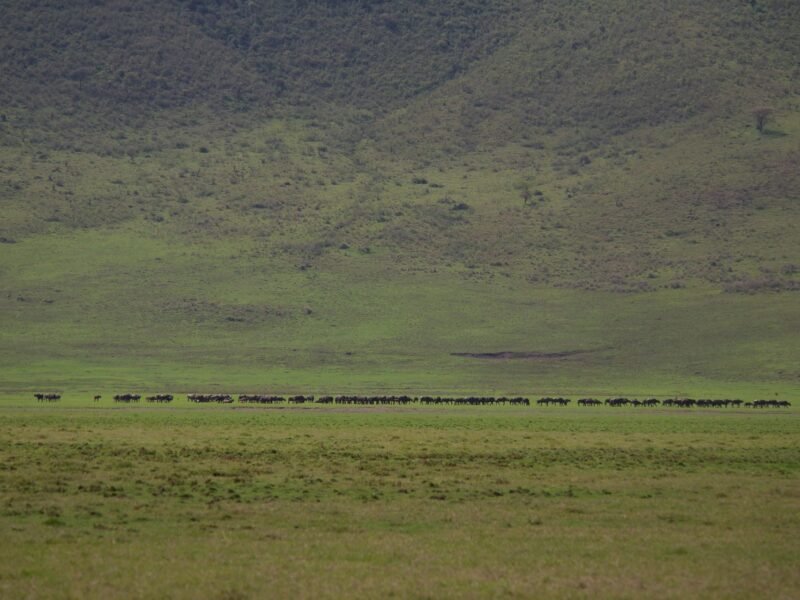
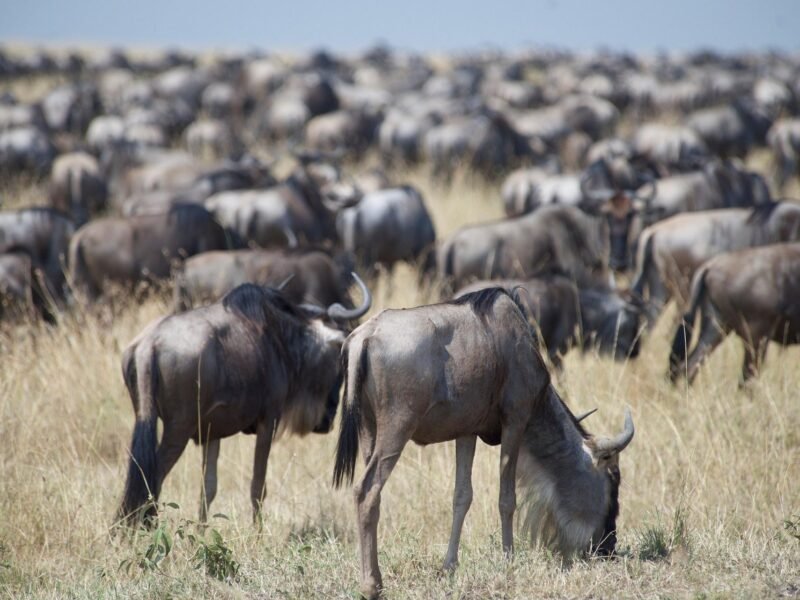
    The park is the core of an ecosystem carrying well over a million wildebeest, several hundred thousand zebra and the predators following them. The great migration is not an event on a fixed date but a continuous circuit: calving on the short-grass plains of the south around February, movement north and west through the middle of the year, and the river crossings at the Grumeti and Mara from roughly July to October.

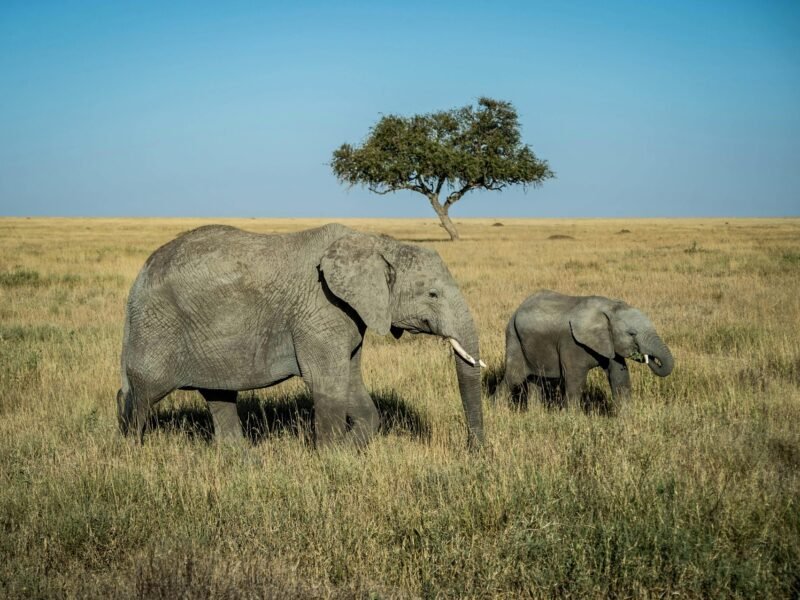
    Outside the migration the Serengeti holds resident lion prides on the kopjes, leopard in the riverine woodland along the Seronera valley, cheetah on the open plains and large elephant and buffalo populations. Big cat viewing here is as reliable as anywhere in Africa.

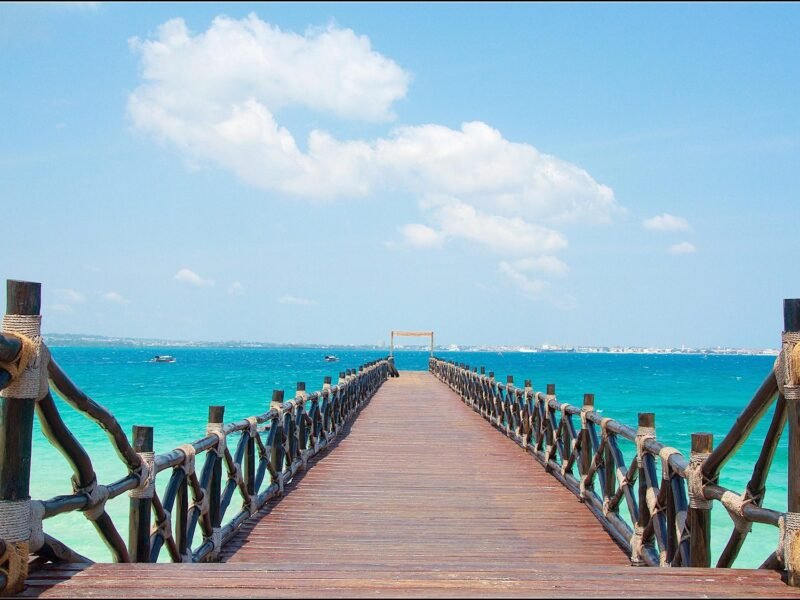
    The park works as a three or four night stay on its own, or as the centrepiece of a northern circuit trip taking in Ngorongoro, Tarangire and Lake Manyara. It combines naturally with a Zanzibar beach stay afterwards, which is the route most of our guests take.

  • Ngorongoro Crater

    The Ngorongoro Crater is the caldera of a volcano collapsed in on itself some two and a half million years ago. The walls stand about 600 metres above a floor covering roughly 260 square kilometres, and the whole enclosed system holds a permanent population of around 25,000 large animals.

    The result is unlike anywhere else on a Tanzanian safari. Grassland, swamp, soda lake and acacia forest sit within a single morning’s drive of each other, and the density of animals within that space means a half-day on the crater floor often produces more sightings than a full day elsewhere.

    The crater is one of the few reliable places in Tanzania to see black rhino, and it holds large lion prides, elephant bulls with notably heavy tusks, hippo, buffalo and flamingo on Lake Magadi. It sits within the wider Ngorongoro Conservation Area, a UNESCO World Heritage Site where Maasai communities continue to graze cattle alongside the wildlife.

    Olduvai Gorge, where the Leakeys uncovered some of the earliest known hominin remains, lies on the road between the crater and the Serengeti and is worth an hour on the way through.

  • Tarangire National Park

    Tarangire covers roughly 2,850 square kilometres south-east of Lake Manyara, and it is the elephant park of the northern circuit. In the dry months the Tarangire River is the only permanent water for a long way in any direction, and the animals concentrate along it in numbers matching anything in the Serengeti.

    The landscape is distinctive. Ancient baobabs stand across the ridges, giving the park a look nothing else on the circuit has, and the river valley cuts through swamp and acacia woodland below them.

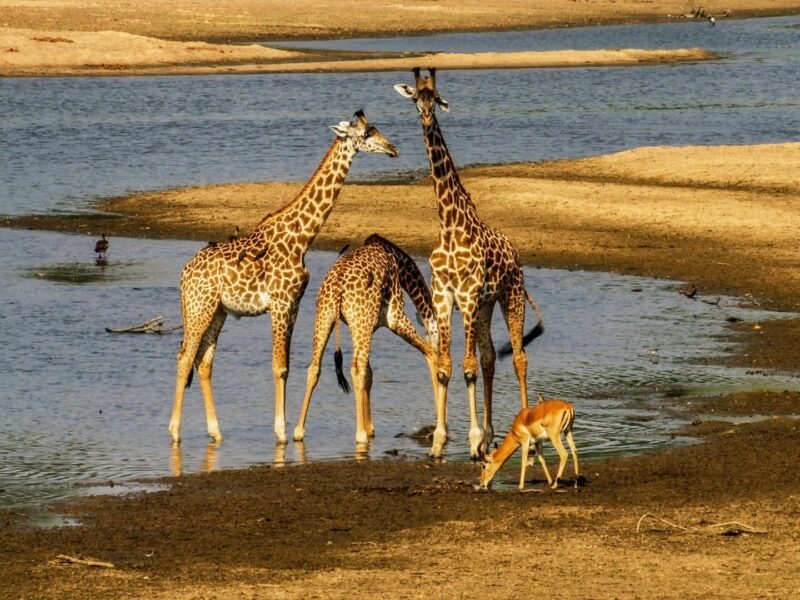
    Beyond elephant, Tarangire holds lion, leopard, cheetah, giraffe, zebra, wildebeest and large buffalo herds, plus dry-country species scarce elsewhere on the circuit, including fringe-eared oryx and lesser kudu. The birdlife is exceptional, with over 500 recorded species.

    Most northern circuit itineraries treat Tarangire as a first or last stop, one or two nights on the way in or out of Arusha. It rewards more time than it usually gets.

  • Lake Manyara National Park

    Lake Manyara covers about 330 square kilometres, two thirds of it lake, squeezed between the Rift Valley escarpment and the shallow soda water of the lake itself. It is a small park by Tanzanian standards and packs a surprising range of habitat into that space.

    The entrance opens into groundwater forest fed by springs at the base of the escarpment, dense and green and full of blue monkeys and baboons. Beyond it the forest gives way to acacia woodland, then open floodplain, then the lake shore where flamingo, pelican and storks gather in numbers.

    Manyara is best known for its tree-climbing lions, which rest in the acacias through the heat of the day. The behaviour is not guaranteed and not unique to this park, but Manyara is one of the more reliable places to look for it. Elephant move through the forest, hippo lie in the pools near the entrance and the birdlife is excellent throughout.

    The park is usually visited as a half day or full day on the road between Arusha and Ngorongoro, and it works well as an opening stop before the larger parks.

  • Tanzania Safari and Zanzibar Beach

    The most requested trip we build, and the reason a Zanzibar-based operator is the right company to build it. You see the wildlife first, while you have the energy for early starts, then fly to the coast and stop moving.

    Two routes work. The northern circuit runs Arusha, Tarangire, Lake Manyara, Ngorongoro and the Serengeti, and then a flight from the Serengeti or Arusha to Zanzibar. It is the classic, and it is where the migration is. The southern circuit runs Nyerere and Ruaha, reached by light aircraft directly from Zanzibar, with boat safaris, walking safaris and almost no other vehicles.

    Most trips run seven to fourteen nights in total. A workable minimum is four nights on safari and four on the beach. Longer is better, particularly if you want more than one safari area.

    We handle the whole route: the safari, the internal flights, the Zanzibar hotel, every transfer, and the excursions once you are on the island. One company, one point of contact and one invoice.

    Note for the operator: the source material supplied no safari itineraries or prices. Add your day-by-day itineraries and rates here before this page goes live, or leave it as an enquiry page and quote each trip individually.